Agro-industry at the center: How do communities on the edge respond?
DOI:
https://doi.org/10.5304/jafscd.2026.152.021
Keywords:
agro-industrial development, low and middle income countries (LMIC), environmental justice, occupational health, engaged ethnographyAbstract
First paragraph:
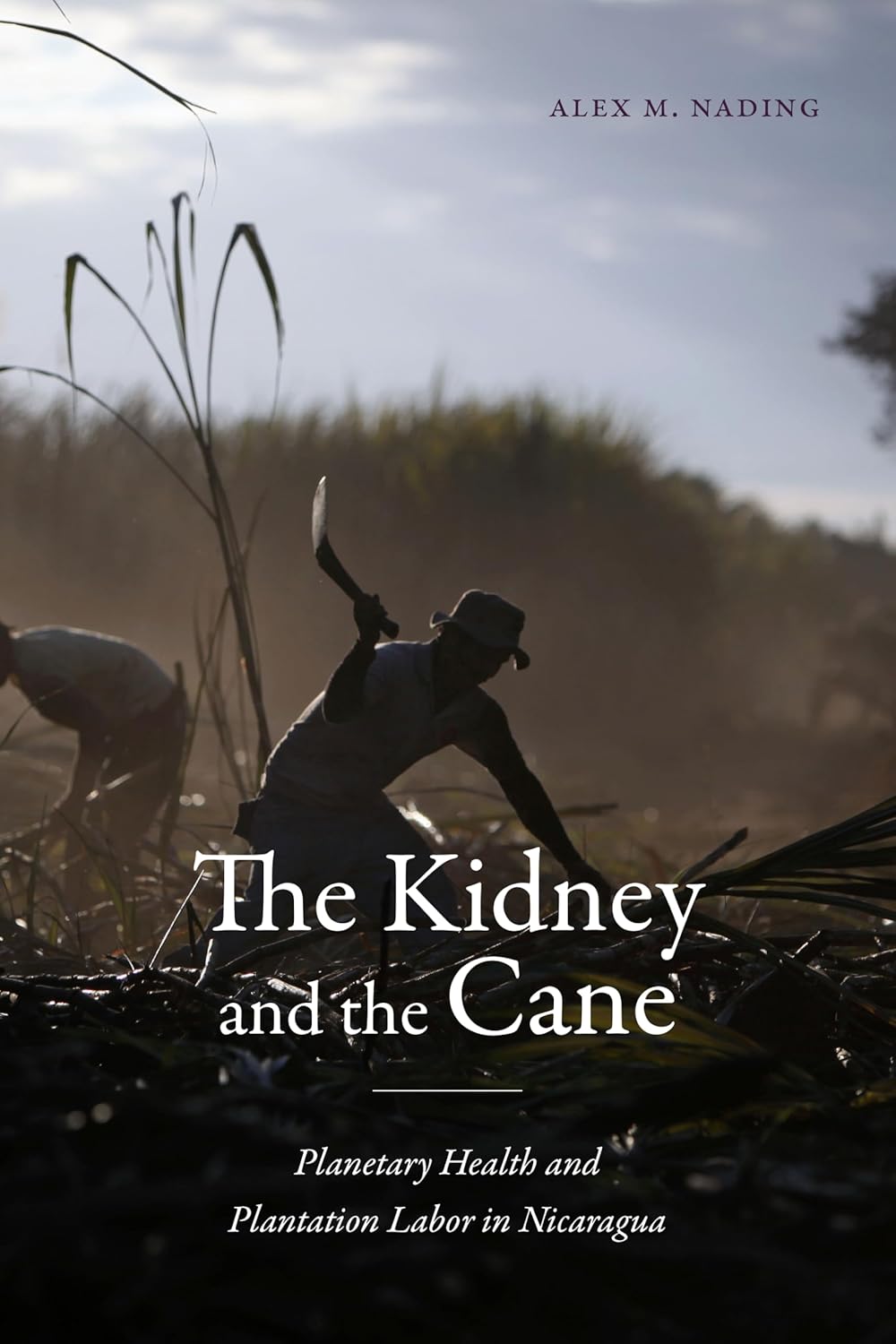
Alex Nading’s second book focuses primarily on the communities that surround a Central American sugarcane operation—yet it spans the local to the global with a masterful combination of participatory observation, archival research, and theoretical reflection. The Asociación Montelimar Benedición de Dios (AMBED) represents around 700 rural Nicaraguan people who identified as “workers, former workers, residents and members of the communities belonging to the Montelimar Sugar Mill” (p. x). The World Bank has massively funded extensions of the sugar mill operation. AMBED registered a complaint to the Bank’s Compliance Advisor/ Ombudsman (CAO) which set up negotiations with the company. AMBED creatively brings “knowledge of the ground” to these negotiations for “life supports” for themselves and their communities. Nading characterizes “life support systems” as always temporary, whether they be the agrochemicals, harvesting equipment and irrigation canals supporting sugarcane, the hemodialysis machines supporting those with Chronic Kidney Disease of non-traditional origin (CKDnt) in the sugarcane zone, or “projects addressing the cris[e]s of the Anthropocene” (p. xiv). He concretizes the Rockefeller Foundation–Lancet Commission on Planetary Health’s emphasis on the earth’s life-support systems for human health and well-being. He sensitively analyzes how people grapple with life support systems, from legal frameworks like the CAO to irrigation works, to pesticide application regimes, to state-sponsored social security programs, to occupational health measures, to dialysis treatment itself. . . . [He] suggests that a close look at what happens along the unstable edges where life support systems meet might provide insights into the possibilities and limitations of planetary health. (p. xiv) . . .
Metrics
Downloads
Published
How to Cite
Issue
Section
Categories
License
Copyright (c) 2026 Donald C. Cole

This work is licensed under a Creative Commons Attribution 4.0 International License.
The copyright to all content published in JAFSCD belongs to the author(s). It is licensed as CC BY 4.0. This license determines how you may reprint, copy, distribute, or otherwise share JAFSCD content.