From power trees of the enclosure to the apple trees of the commons
DOI:
https://doi.org/10.5304/jafscd.2026.152.023
Keywords:
agroecology, seed commons, food sovereignty, apple breeding, reviewAbstract
First paragraph:
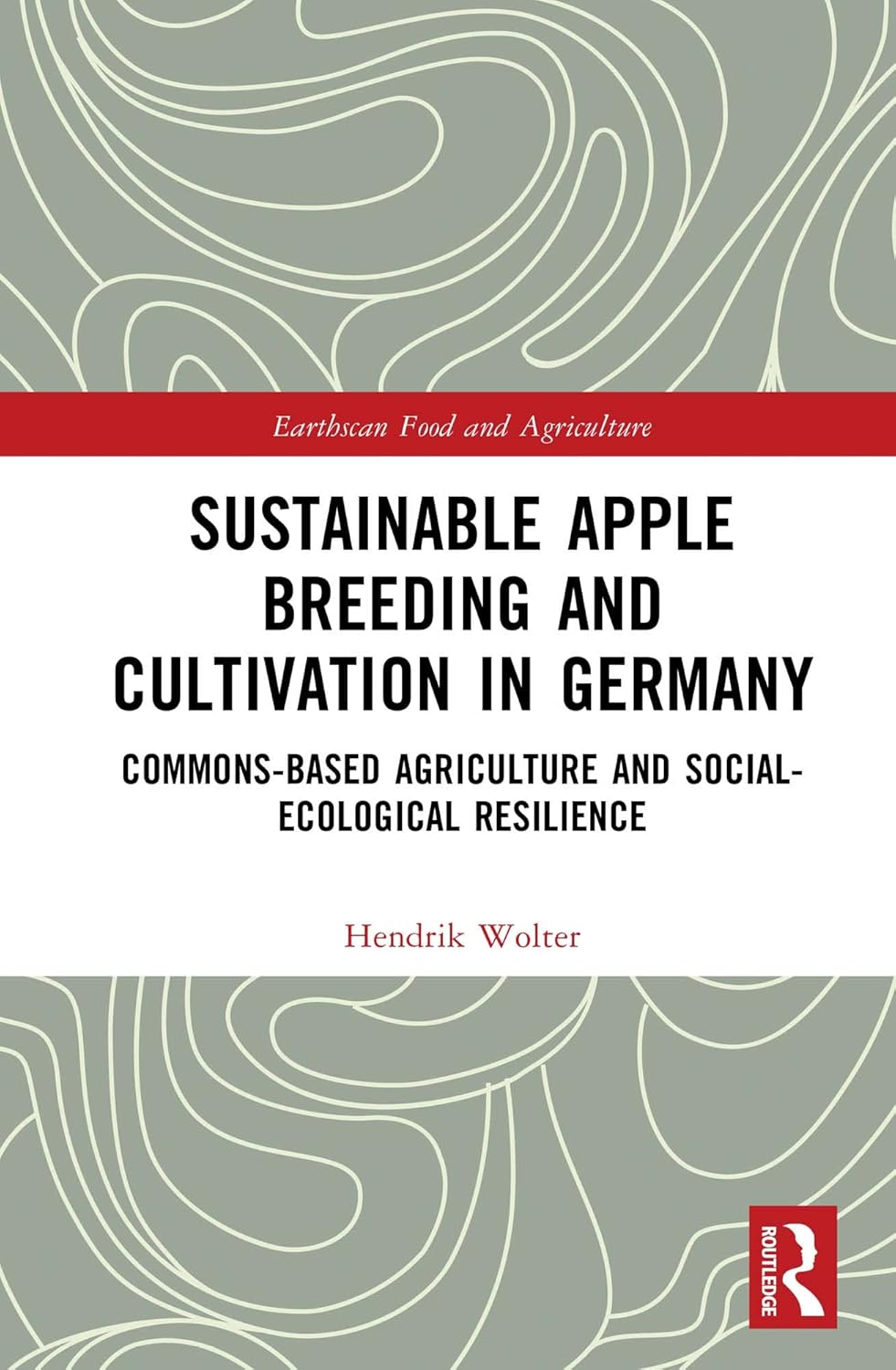
Hendrik Wolter’s Sustainable Apple Breeding and Cultivation in Germany: Commons Based Agriculture and Social Ecological Resilience offers a comprehensive and timely analysis of how fruit breeding systems are intertwined with the ecological, social, and political dynamics of food systems. Wolter argues that apple breeding should be understood not as a purely technical or scientific pursuit but as a social and ecological process embedded in ownership structures, governance arrangements, and market institutions. Drawing on social ecological systems theory, resilience thinking, and commons scholarship, he redefines fruit breeding as a reflection of broader questions about power, equity, and sustainability. His analysis resonates strongly with the four-dimensional agroecology framework developed by the Coopération Internationale pour le Développement et la Solidarité (CIDSE, 2018) which incorporates ecological, social, political, and economic dimensions. In this review, I contend that Wolter’s book is an important contribution to the agroecology social movement. The book offers both theoretical depth and practical insight into how collective governance can foster ecological resilience and social justice in food systems. . . .
Metrics
Downloads
Published
How to Cite
Issue
Section
Categories
License
Copyright (c) 2026 Charles L. Tumuhe

This work is licensed under a Creative Commons Attribution 4.0 International License.
The copyright to all content published in JAFSCD belongs to the author(s). It is licensed as CC BY 4.0. This license determines how you may reprint, copy, distribute, or otherwise share JAFSCD content.