Beyond coordinates: A structured look at food system mapping
DOI:
https://doi.org/10.5304/jafscd.2026.152.009
Keywords:
food system mapping, GIS, cartography, food system planning, urban food systemsAbstract
First paragraph:
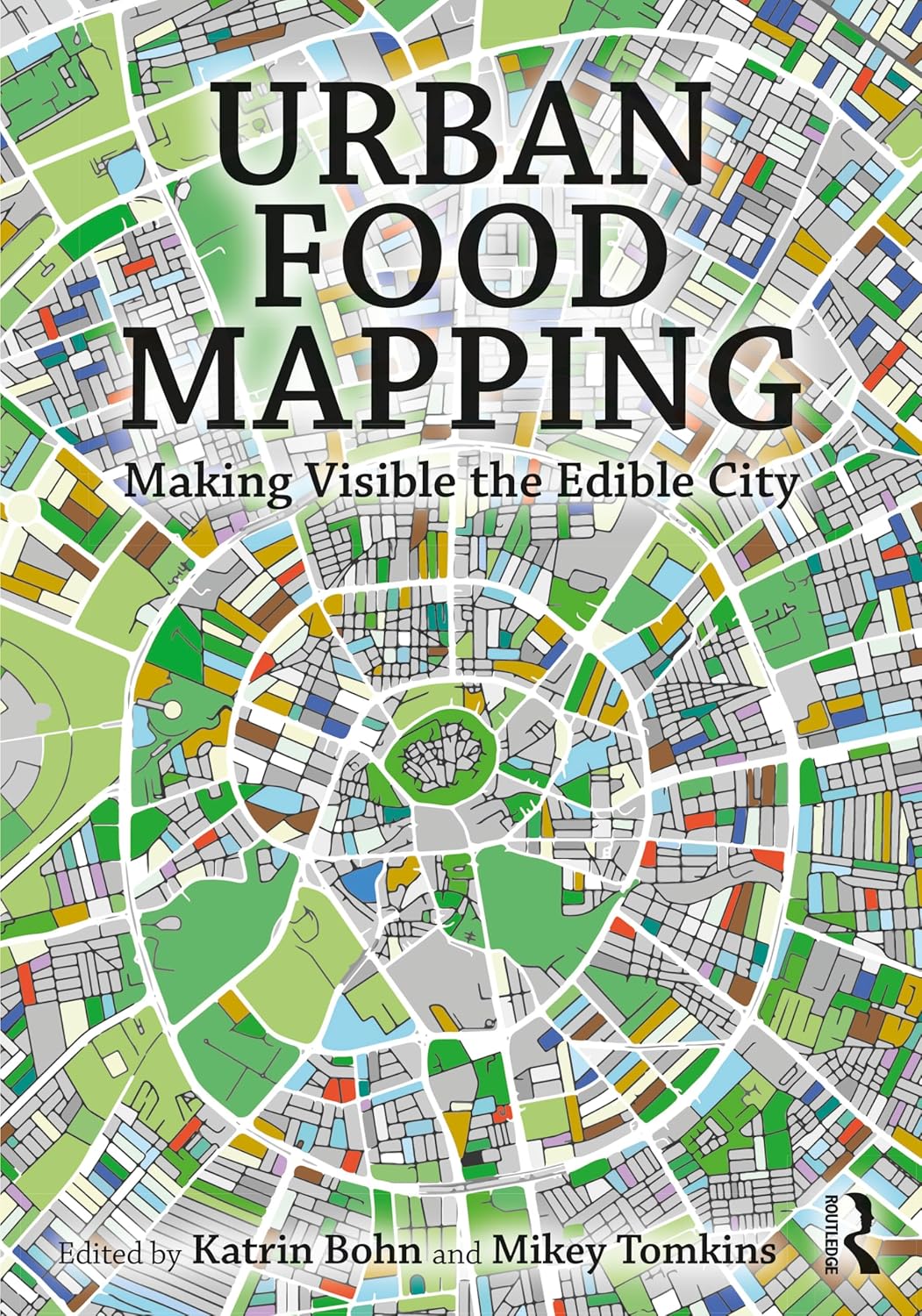
In this era defined by rapid urbanization and increasingly complex, precarious global food supply chains, the essential question of “how we feed ourselves as an urban species” has taken on increased urgency. Urban Food Mapping: Making Visible the Edible City, edited by architect Katrin Bohn and researcher Mikey Tomkins, addresses this question by celebrating and systematizing the act of food mapping as an area of research and design practice. The editors assert that mapping is not merely a tool for spatial representation but a necessary methodology for critical inquiry, community empowerment, and, ultimately, effective urban design and policy intervention. This volume establishes urban food mapping as a bridge between the often-abstract theoretical concerns of urbanism and the tangible realities of food systems, offering a rich, multidisciplinary survey that will prove invaluable to scholars and practitioners across the food, planning, and community development sectors. . . .
Metrics
Downloads
Published
How to Cite
Issue
Section
Categories
License
Copyright (c) 2026 Hannah Dankbar

This work is licensed under a Creative Commons Attribution 4.0 International License.
The copyright to all content published in JAFSCD belongs to the author(s). It is licensed as CC BY 4.0. This license determines how you may reprint, copy, distribute, or otherwise share JAFSCD content.