The promise and peril of “miracle crops” as vehicles for sustainable development
DOI:
https://doi.org/10.5304/jafscd.2026.152.033
Keywords:
quinoa, miracle crops, miracle foods, global supply chains, organic certification, cooperativesAbstract
First paragraph:
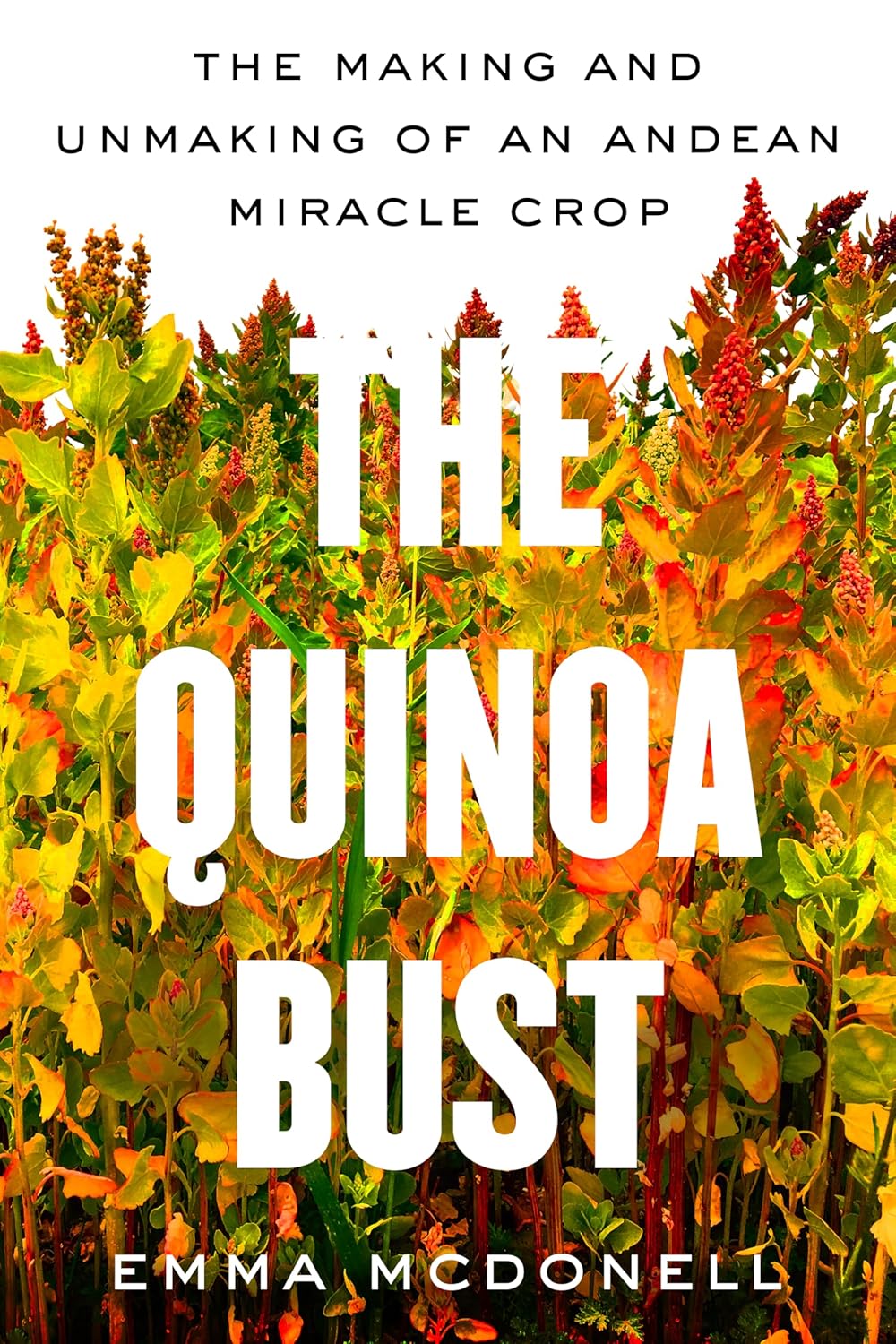
In The Quinoa Bust: The Making and Unmaking of an Andean Miracle Crop, cultural anthropologist Emma McDonell describes the emergence of quinoa as a global commodity, tracing its transformation from a staple crop of the Andean Altiplano to a “miracle food” sold at grocery stores worldwide. Quinoa’s transformation is driven by its promise to alleviate poverty among indigenous smallholders in the Altiplano while at the same time addressing malnutrition in urban communities in the region. McDonell charts how these at times contradictory objectives are pursued by a cast of actors along the global supply chain, each projecting and acting on their own aspirations for quinoa. Drawing on deep ethnographic work, she follows farmers, cooperatives, técnicos (private extension agents), processors, and buyers in Puno, Peru, over a 10-year period as they navigate the volatile quinoa economy. . . .
Metrics
Downloads
Published
How to Cite
Issue
Section
Categories
License
Copyright (c) 2026 Hans Goertz

This work is licensed under a Creative Commons Attribution 4.0 International License.
The copyright to all content published in JAFSCD belongs to the author(s). It is licensed as CC BY 4.0. This license determines how you may reprint, copy, distribute, or otherwise share JAFSCD content.