Growing food and radical hope in Glasgow
A review of "The Practice of Collective Escape"
DOI:
https://doi.org/10.5304/jafscd.2026.153.023
Keywords:
urban agriculture, urban politics, social transformation, food justice, political activismAbstract
First paragraph:
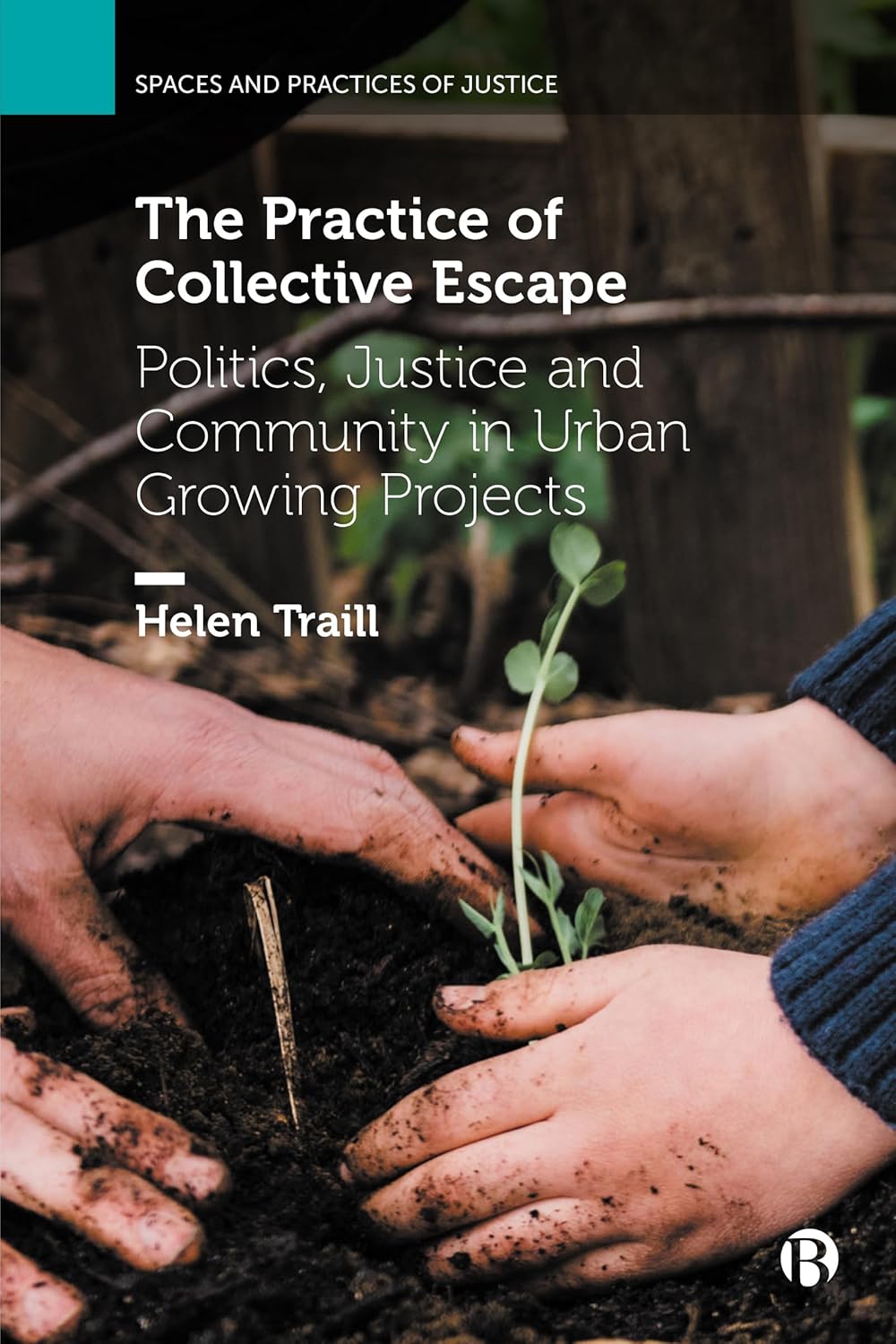
In the Practice of Collective Escape: Politics, Justice and Community in Urban Growing Projects, Helen Traill gives us a personal tour through the social complexities of community growing projects, accompanied by the rich insights of her ethnographic work over six years in Glasgow, Scotland. She follows two community growing sites during the Brexit transition and the COVID-19 pandemic. Her analytical lens weaves the work of authors who have navigated topics of inclusion and exclusion in the Commons, negative and positive freedom, social justice and political activism, and the overall benefits and challenges of urban agriculture projects. The author illustrates her claims with illuminating stories and choice quotes from gardeners and the wider community connected to the case studies. Truly, reading this as a researcher who has spent both a fair amount of time with my hands in the soil in urban growing projects and behind the desk reading about them (studying public health benefits and governance challenges), Traill’s book stands apart as an illuminating examination of an infrastructure feature increasingly accepted as a net positive in cities. Yet, these gardens are rarely critically looked at as Petri dishes for individual and community transformation, which this book does through examining concepts of inclusion, individual escape, and political activism. . . .
Metrics
Downloads
Published
How to Cite
Issue
Section
Categories
License
Copyright (c) 2026 Rose Jennings

This work is licensed under a Creative Commons Attribution 4.0 International License.
The copyright to all content published in JAFSCD belongs to the author(s). It is licensed as CC BY 4.0. This license determines how you may reprint, copy, distribute, or otherwise share JAFSCD content.