Africonnections: Seeds of memory, roots of survival
DOI:
https://doi.org/10.5304/jafscd.2026.154.040
Keywords:
African agronomic knowledge, Black agricultural history, cultural memory, agricultural justice, African diasporaAbstract
First paragraphs:
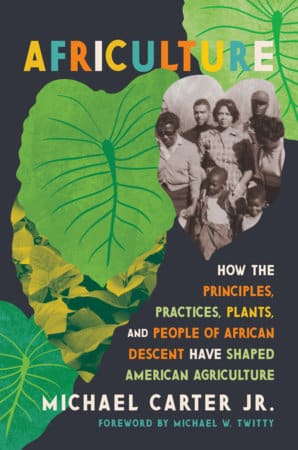
Through Africulture: How the Principles, Practices, Plants, and People of African Descent Have Shaped American Agriculture, Michael Carter Jr. is building a bridge that many Black, African, and African American farmers, agriculturists, and future generations have long been waiting for—a bridge that makes it possible to see ourselves reflected in agricultural spaces. Myself included. This is not easy work. With the records of those kidnapped and enslaved in the Americas missing, fragmented, or deliberately erased, the work of reconnecting begins with the seeds that traveled here through the hands and knowledge of the enslaved.
The plants that grow in American soil tell a story of violence, but they also tell a story of resilience, fortitude, and deep agronomic knowledge. My ancestors, Carter Jr.’s ancestors, and the ancestors of countless Black Americans came here against their will and endured unimaginable suffering. Yet, through narratives like Carter Jr.’s, their stories live again. They reveal how the knowledge and labor of enslaved Africans shaped American agriculture, even as colonizers refused to acknowledge the depth of their expertise or the fullness of their humanity. . . .
Metrics
Downloads
Published
How to Cite
License
Copyright (c) 2026 Elisabeth Q. Ramsey

This work is licensed under a Creative Commons Attribution 4.0 International License.
The copyright to all content published in JAFSCD belongs to the author(s). It is licensed as CC BY 4.0. This license determines how you may reprint, copy, distribute, or otherwise share JAFSCD content.